

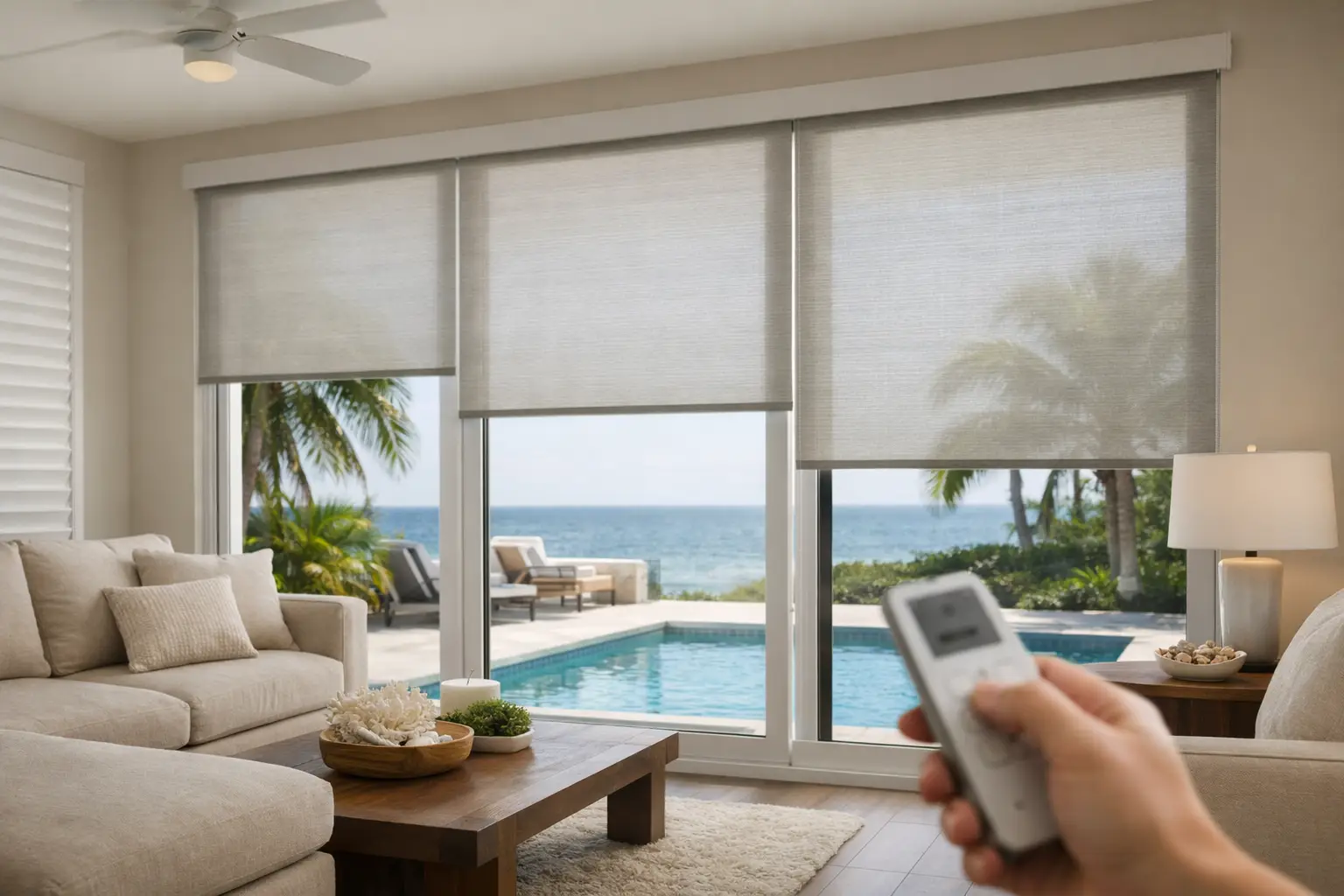
A west-facing room in Boca Raton can be bright and beautiful at 9 a.m., then uncomfortably hot and glaring by midafternoon. If you find yourself repeatedly adjusting shades to protect furnishings, reduce screen glare, or restore privacy, you may be asking: are motorized shades worth it? For many South Florida homeowners, the answer is yes – not because they are a novelty, but because they make a daily job easier and help manage intense sunlight more consistently.
Motorization is an investment, and it is not necessary for every window. The best choice depends on the room, the type and number of windows, your preferred level of control, and the quality of the shade itself. Here is a practical way to decide whether automated shades belong in your home.
What Motorized Shades Actually Do
Motorized shades raise, lower, and in some cases tilt with the touch of a remote, wall control, app, or voice command. They can also be programmed on schedules. A solar shade might lower during the strongest afternoon sun, while bedroom shades can close automatically in the evening for privacy and open gently in the morning.
The convenience is real, but the greater benefit is consistency. Manual shades only work when someone remembers to adjust them. Automated window coverings can respond to the rhythm of your household and the exposure of a particular room. That is especially valuable in homes with large glass doors, high windows, or several shades that need to move together.
Motorization is available for many styles, including roller shades, solar shades, cellular and honeycomb shades, Roman shades, woven woods, draperies, and certain blinds. The right control system and fabric should be selected together, rather than treating automation as an afterthought.
Are Motorized Shades Worth It for Sun Control?
South Florida sun can fade floors, artwork, upholstery, and wood finishes over time. It can also create significant glare on televisions and computer screens. Motorized solar shades offer a refined way to manage that light without making a room feel closed off.
For example, a solar shade with an appropriate openness factor can soften harsh daylight and preserve an outdoor view. Set it to lower during the afternoon, and you gain more dependable protection when the sun is at its strongest. In a media room or home office, that can mean less screen glare without having to interrupt a meeting or pause a movie.
Motorized blackout or room-darkening shades serve a different purpose. They are particularly useful in bedrooms, nurseries, and rooms where sleep or privacy is the priority. Pairing a light-filtering shade with side drapery panels, or using a dual-shade system, can provide daytime light control and more complete privacy after dark.
The system is not a substitute for properly selected fabrics and materials. A poor shade choice will not become more effective simply because it is motorized. During a professional consultation, it helps to look at each window’s direction, the amount of direct sun, the view, and how the room is used before choosing a fabric.
Convenience Matters Most on Difficult Windows
Some windows practically invite motorization. Tall foyer windows, clerestory windows, glass walls, and windows behind a soaking tub or large piece of furniture are hard to reach. Leaving those shades in one position all year is common, but it limits the value of the window treatment.
A single remote can operate a group of shades at once, making it easy to close a wall of windows before leaving for the day or adjust several living room shades for movie night. This can be just as useful in an office, where a conference room needs to control glare quickly without disrupting a presentation.
Motorization can also be a thoughtful choice for homeowners who want a home that remains comfortable and easy to use as their needs change. Removing cords and reducing the need to reach, bend, or move furniture adds day-to-day practicality without compromising design.
Privacy and Security Without the Daily Routine
Privacy is often less predictable than sunlight. In neighborhoods with close-by homes, evening visibility can change quickly once interior lights are on. Scheduled shades can close at a chosen time, helping create a more private environment even when dinner, family activities, or an evening out distract you from the routine.
When traveling, automated shades can be scheduled to move at natural times. That can make a home appear attended, although it should be viewed as one small part of an overall home security plan rather than a replacement for security systems or good habits.
For condos and homes with expansive windows, motorization makes it much more likely that privacy shades will be used as intended. The result is a home that feels polished and protected instead of exposed after sunset.
The Cost Question: Where the Value Comes From
Motorized shades cost more than comparable manual shades. Pricing varies based on window size, shade style, fabric, motor type, power source, controls, and whether multiple shades need to be grouped or integrated into a home automation system. Custom products and professional installation also matter, especially where precise fit and clean wiring are important.
That added cost tends to make the most sense when motorization solves a clear problem. It is easier to justify for a room with daily glare, a large bank of doors, inaccessible windows, or a primary bedroom where comfort and privacy are priorities. It may be less necessary for a rarely used guest room with one easy-to-reach window.
Energy savings can be part of the value, but expectations should be realistic. Closing shades during the hottest part of the day may help reduce solar heat gain, particularly with the right cellular or solar shade. Actual savings depend on the window, glass, insulation, thermostat settings, shade material, and household habits. Most homeowners appreciate the improved comfort first, with any reduction in cooling demand as an added benefit.
A well-designed motorized shade is also a long-term design upgrade. It eliminates hanging cords, keeps window lines clean, and makes an entire room feel more considered. For clients who have invested in custom furnishings, flooring, or renovations, that polished functionality is often worth more than the simple convenience of a remote.
Battery, Hardwired, or Plug-In Motorization?
The power option deserves careful thought before ordering. Battery-powered shades are often ideal for finished homes because they avoid opening walls or running visible wires. Modern rechargeable battery systems are convenient, though batteries will need periodic charging or replacement depending on shade size and frequency of use.
Hardwired motorization is an excellent option during new construction or a major renovation. It offers a permanent power source and can be especially appealing for numerous shades or hard-to-access windows. It requires early planning with the builder or electrician, since power needs to be placed where the shade system requires it.
Plug-in systems can work well where an outlet is discreetly located near the window. They are sometimes the practical middle ground, although cord routing should be carefully considered to preserve a clean appearance.
The right answer is not always the most technical one. A professional installer can evaluate access, window construction, electrical options, and the finished look before recommending a power method.
Choosing Shades That Look as Good as They Work
Motorization should support the design, not dominate it. In a coastal contemporary living room, streamlined roller or solar shades may complement clean architectural lines. In a more traditional home, motorized woven woods, Roman shades, or draperies can add texture and softness while offering the same convenient operation.
Color, opacity, and mounting style all affect the result. A shade that disappears into the window frame creates a different effect than one mounted above the opening to make windows appear taller. For rooms with broad views, the fabric should be selected with the view in mind. For private bedrooms, edge gaps and light leakage should be discussed before installation.
This is where custom guidance is valuable. Boca Blinds has helped South Florida homeowners select and install window treatments since 1976, pairing recognized product lines with a design process that considers how a room looks, feels, and functions.
When Manual Shades May Be the Better Choice
Motorization is not automatically the best use of the budget. Manual shades remain an excellent choice for accessible windows, secondary rooms, and projects where a homeowner prefers simple operation. Quality manual window treatments can still provide beautiful fabric, privacy, insulation, and sun control.
Some homeowners choose a hybrid approach: motorized shades in the primary suite, living areas, high windows, and large sliding doors, with manual shades elsewhere. This lets the investment focus on the windows where automation delivers a noticeable everyday benefit.
It is also wise to consider how you prefer to control your home. If an app, remote, and schedule sound helpful, motorization will likely feel natural. If you would rather adjust a shade by hand and have no need for automated timing, a manual option may suit you perfectly.
The best window treatments should not feel like another technology to manage. They should make your rooms more comfortable, protect what you love, and look right at every hour of the day. A free in-home consultation can help you see which windows would benefit most from motorization and which ones are better served by a beautifully made manual shade.