

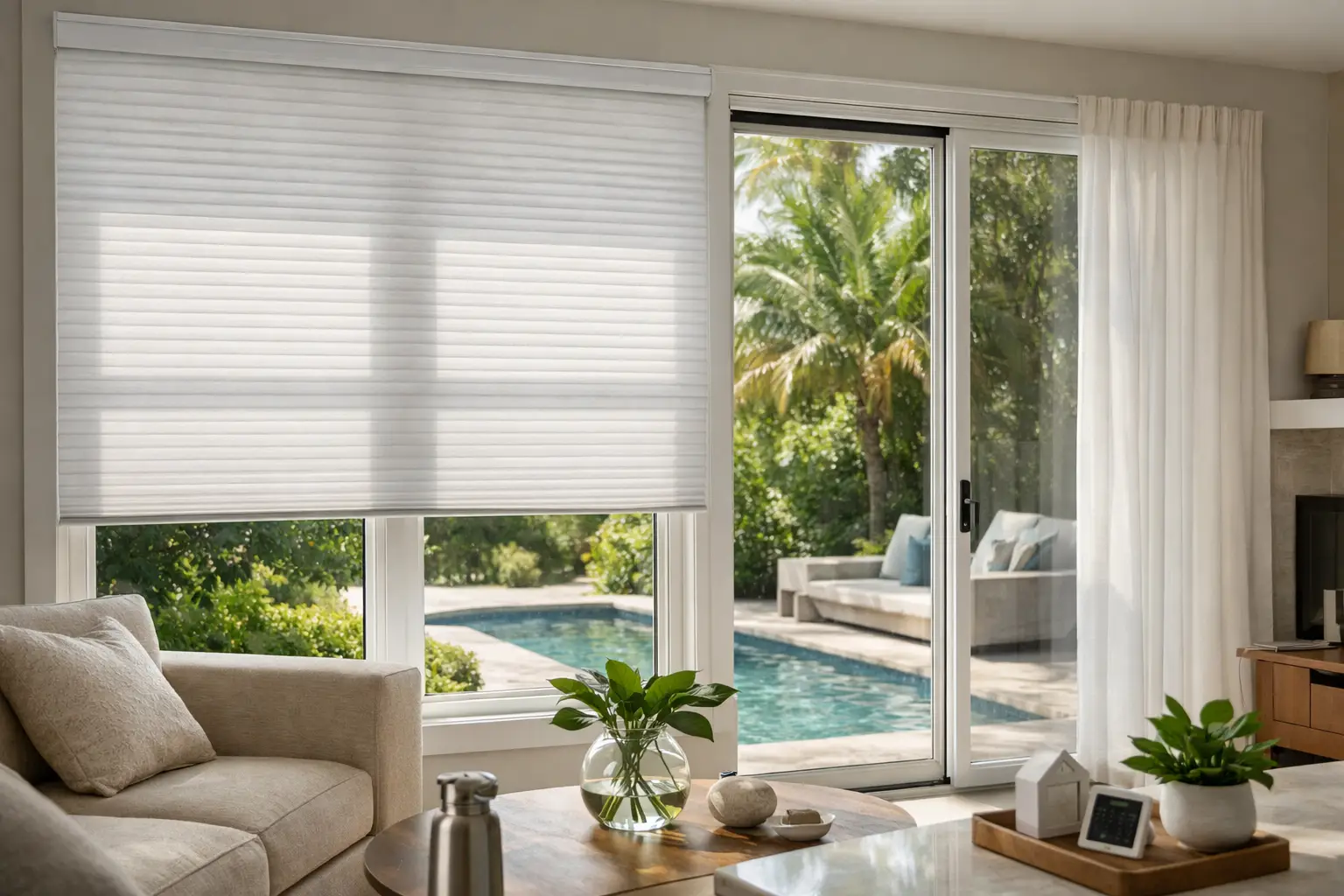
If one room in your home always feels warmer than the rest, your windows are usually part of the reason. That is why homeowners often ask, are cellular shades energy efficient? In many cases, yes – and more than standard window coverings. Their design is built to help slow heat transfer, which can make a noticeable difference in comfort, glare control, and how hard your cooling system has to work.
For South Florida homes, that matters. Large windows, strong sun exposure, and long cooling seasons can make beautiful glass feel like a weak spot in the room. Cellular shades are popular because they do more than soften light and add privacy. They also create an insulating layer that supports a more comfortable interior.
How cellular shades are designed to save energy
Cellular shades are sometimes called honeycomb shades because of the way the fabric forms pockets, or cells, across the shade. Those pockets trap air. That trapped air acts as a buffer between the glass and the room, slowing the movement of heat.
This is the real reason cellular shades stand out from many other window treatments. A flat blind or simple shade can cover a window, but a cellular shade is specifically engineered to insulate. When sunlight and outdoor heat hit the glass, the shade helps reduce how quickly that heat moves indoors. In cooler conditions, it can also help limit heat loss through the window.
The effect is not magic, and it does not replace quality glass or proper insulation elsewhere in the home. But it is a practical upgrade. On windows that get heavy sun, the difference can be meaningful.
Are cellular shades energy efficient compared to other options?
Compared with many common window coverings, cellular shades are among the strongest choices for energy performance. Traditional aluminum blinds offer basic light control, but they do little to insulate. Faux wood and wood blinds have more substance, yet they still have slats and gaps that allow more heat transfer. Roller shades can help with glare and UV protection, especially with performance fabrics, but standard versions usually do not create the same insulating air pockets.
That said, the best option depends on the room and the goal. If your top priority is preserving a view, a solar shade may be the better fit during the day. If your main concern is room-darkening and insulation, a cellular shade often has the edge. If you want a more architectural look, shutters may suit the design better, though the energy performance will vary by construction and fit.
For homeowners balancing comfort, appearance, and efficiency, cellular shades are often one of the smartest all-around solutions.
What affects how efficient they really are
Not all cellular shades perform the same way. The biggest variables are cell construction, fabric opacity, fit, and installation quality.
Single-cell shades provide a layer of insulation and can be a very good choice for many rooms. Double-cell shades add another layer of trapped air, which can improve insulating value. In a climate where the sun puts constant stress on windows, that extra performance can be worthwhile, especially on large expanses of glass or rooms with western exposure.
Fabric selection matters too. Light-filtering fabrics can reduce glare and heat while keeping the room bright. Blackout fabrics usually provide greater privacy and light control, and they may improve energy performance further. The trade-off is atmosphere. A blackout fabric can make a room feel more enclosed, which is excellent for bedrooms and media spaces but not always ideal in a living area where you want soft natural light.
Fit is another major factor. Custom shades that are measured for the window will usually perform better than off-the-shelf products. Gaps at the sides can let in light and allow more heat movement, which reduces the insulating benefit. A professionally measured and installed shade simply does a better job of covering the opening the way it should.
Why they make sense in South Florida homes
In colder climates, energy-efficient window treatments are often discussed in terms of keeping heat inside. In South Florida, the conversation is more about keeping solar heat out and improving day-to-day comfort.
That is where cellular shades can be especially useful. Rooms with tall windows, sliding glass doors, east-facing breakfast areas, or west-facing family rooms can heat up quickly. Even when your air conditioning is running, that radiant heat near the glass can make the space feel uneven. Cellular shades help soften that effect.
They can also reduce harsh glare on floors, furniture, televisions, and work surfaces. So while the energy question is important, many homeowners end up appreciating the comfort and light management just as much. A room that feels cooler and easier to use in the afternoon is often the real win.
The trade-offs homeowners should know
Cellular shades are effective, but they are not perfect for every situation. If you want a crisp, hard-lined look with visible louvers, plantation shutters may better suit the architecture of your home. If preserving an open daytime view is essential, solar shades may feel less visually blocking.
There is also the question of fabric appearance. Cellular shades have a softer profile than shutters or wood blinds, which some homeowners love and others want to balance with drapery panels or a more tailored color choice. Fortunately, custom options have come a long way, and today’s fabrics offer a much more refined look than older styles.
Operation matters too. In large windows or hard-to-reach areas, motorization can make a big difference in convenience. A shade that stays open because it is inconvenient to adjust is not helping much with energy control. The easier it is to use, the more likely you are to get the benefit.
Where cellular shades work best
Cellular shades are especially effective in bedrooms, living rooms, home offices, and any area with strong direct sun. They are also a strong option for homes with large window openings where glare and heat gain are regular frustrations.
For offices, they offer a clean, polished look while helping reduce screen glare and afternoon heat buildup. For bedrooms, blackout cellular shades can support both comfort and better sleep. In family spaces, light-filtering styles often strike the right balance between brightness and protection.
Sliding glass doors and oversized windows may need special attention. The right product configuration, stack, and operating style matter just as much as fabric choice. This is where expert guidance becomes valuable, because what works beautifully on a standard bedroom window may not be the best answer for a full wall of glass.
Customization makes a bigger difference than most people expect
Energy efficiency is not just about the product category. It is about choosing the right version of that product for the way your home is built and used.
A north-facing guest room has different needs than a west-facing primary suite. A condo with expansive glass may need a different solution than a traditional home with smaller divided windows. The best cellular shades are not simply chosen by color. They are selected based on exposure, privacy needs, room function, and how much natural light you want to keep.
That is why custom consultation matters. An experienced window treatment specialist can help identify where cellular shades will deliver the most value, where another product may be a better fit, and how to coordinate performance with the overall style of the room. For many homeowners, that avoids costly trial and error.
So, are cellular shades worth it?
If your goals include improving comfort, reducing heat gain, and adding a clean, tailored look to your windows, cellular shades are often worth serious consideration. They are one of the few window treatments specifically designed with insulation in mind, and that functional advantage is real.
The biggest payoff usually comes when they are custom fit, thoughtfully selected, and installed where sun exposure is strongest. In homes across Boca Raton and nearby communities, that can mean cooler-feeling rooms, better glare control, and window treatments that do more than just decorate the glass.
A well-chosen shade should make your home look better, feel better, and work better every day. Cellular shades can do all three, especially when the fit and fabric are matched to the way you live.